Grace Pang
Projects
About
Resume
Redefining parent-teacher collaboration to support children's holistic growth
Havence mobile app ✦ client project
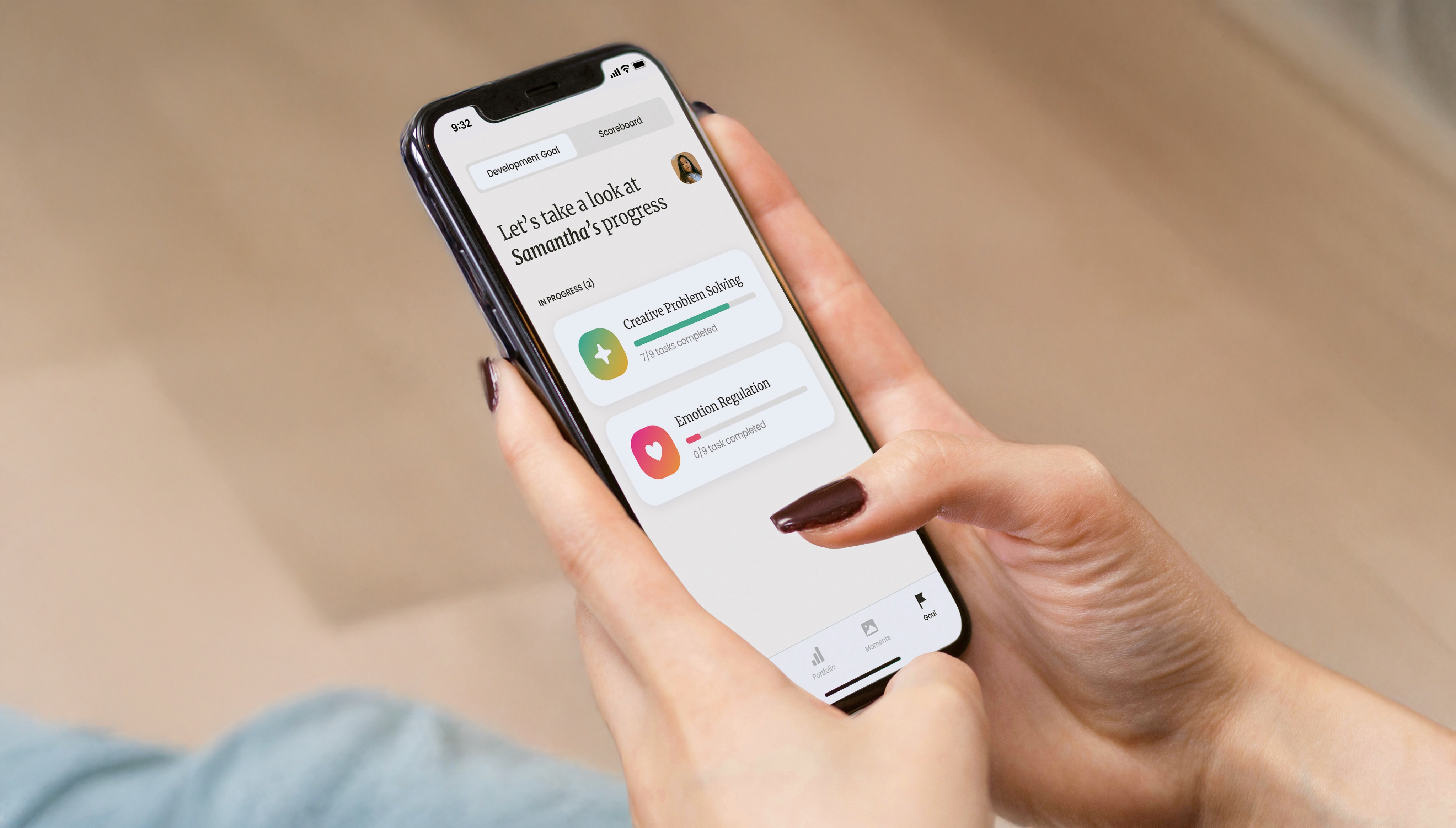
Background
Scope
The objective was to create a proof-of-concept (POC) by integrating insights from secondary sources. This POC will serve as a foundational design for further iterative development based on user feedback. My role includes UX research, UX strategy, wireframing and prototyping.
Client
Havence is a customizable preschool management app that support teachers and parents in managing tasks effectively.
Timeline
1 month
Context
Problem
Parents are not actively engaging in activities that support their children’s holistic development.
The Ministry of Education in Singapore first introduced the Nurturing Early Learners (NEL) framework in 2003 that promised holistic development for preschoolers. However, 20 years later, parents are still not buying in. This raises concerns about its negative impact on children’s long-term growth, highlighting the need for a solution that encourages parents’ engagement.
Solution
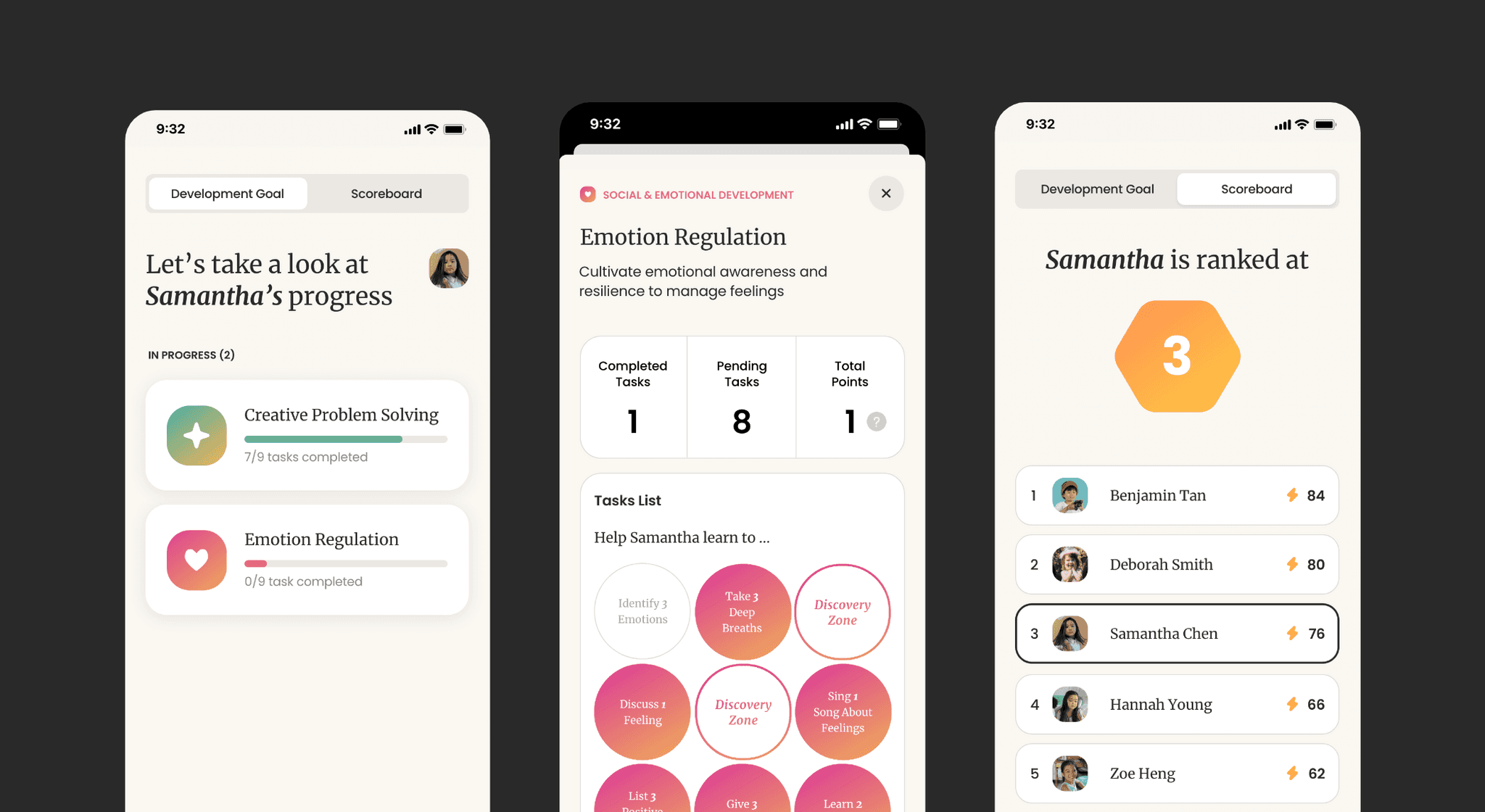
A gamified platform that makes parent-teacher collaboration engaging and rewarding through shared goals and mutual accountability.
Teachers
Set and track goals, engage parents and climb the scoreboard alongside student’s goal progress.
Parents
Track and complete goal tasks, co-set tasks and move their child’s rank up the scoreboard.
supporting features
Mutual point system and scoreboard to motivate progress.
System ties teacher success directly to parent engagement, creating shared accountability
Visible ranking system provides effort recognition, making progress feels rewarding
Teacher
Parent
Contextual discussion board to encourage communication
Each goal has a dedicated discussion space for targeted guidance and interventions
Real-time notifications keeps everyone in the loop, ensuring no messages are missed
Teacher
Parent
Process
Researching the problem space
Research revealed four fundamental barriers preventing parent engagement in child's holistic development.
01
Academic achievement as the standard of success
Most parents equate success with academic milestones, making it difficult for them to buy into alternative approaches.
02
Dysfunctional teamwork and communication
Reactive and defensive behavior of parents and teachers cause friction and conflict, reducing motivation on both ends.
03
Limited exposure and understanding
Resources for parents are limited and not actively promoted, leaving parents uninformed and disinterested.
04
Invisible progress and outcome
There are currently no tangible metrics available to track progress and outcome, parents struggle to see its value.
Learning from successful models
Comparative study revealed opportunities to enhance engagement through parent-teacher collaboration.
Research on Finland and New Zealand showed their success in holistic development boils down to strong parent-teacher collaboration. This discovery prompted me to dive deeper into their collaborative practices to assess our current stance.
✶ Teachers key practices
Finland
N. Zealand
Singapore
Co-develop learning goals with parents
✔️
✔️
✘
Identify engagement opportunities
✔️
✔️
😐
Facilitate development activities
✔️
✔️
✔️
Provide support to achieve goals
✔️
✔️
😐
Provide regular feedback
✔️
✔️
😐
Engage in regular communication with parents
✔️
✔️
😐
✱ Parents key practices
Finland
N. Zealand
Singapore
Co-develop learning goals with teachers
✔️
✔️
✘
Observe child progress
✔️
✔️
😐
Provide regular child progress update
✔️
✔️
✘
Practice development activities
✔️
✔️
✘
Engage in regular communication with teachers
✔️
✔️
😐
Analyzing market and competitions
Competitive analysis highlighted the lack of a parent-teacher collaboration solution.

Qoqolo

Taidii

Illumine
The key finding revealed that while existing solutions offer basic communication and information-sharing tools, there are constraints in creating a sustainable, two-way flow that keep parent and teacher engaged as flow typically ends after information is delivered.
✘ Passive communication tools does not guarantee engagement
✘ One-sided reporting functionality lacks actionable guidance for parents
✘ Obligatory parent assignment feels like a chore and forceful by nature
This finding highlighted a gap in the market for a solution that actively promote parent-teacher collaboration, reinforcing our opportunity for development in this area.
Defining persona
Consolidating key insights into user personas to address collaboration challenges and frustrations.
Since the focus is on collaborative solution, it would most likely be a tool shared between parents and teachers. Therefore, I had to consider teachers as well as the supporting end users that shared an overarching goal.
✶ Created based on observations and data gathered from local forums, social medias, and recent news articles.