Redefining parent-teacher collaboration to support children's holistic growth
Havence / Mobile App / Product Design
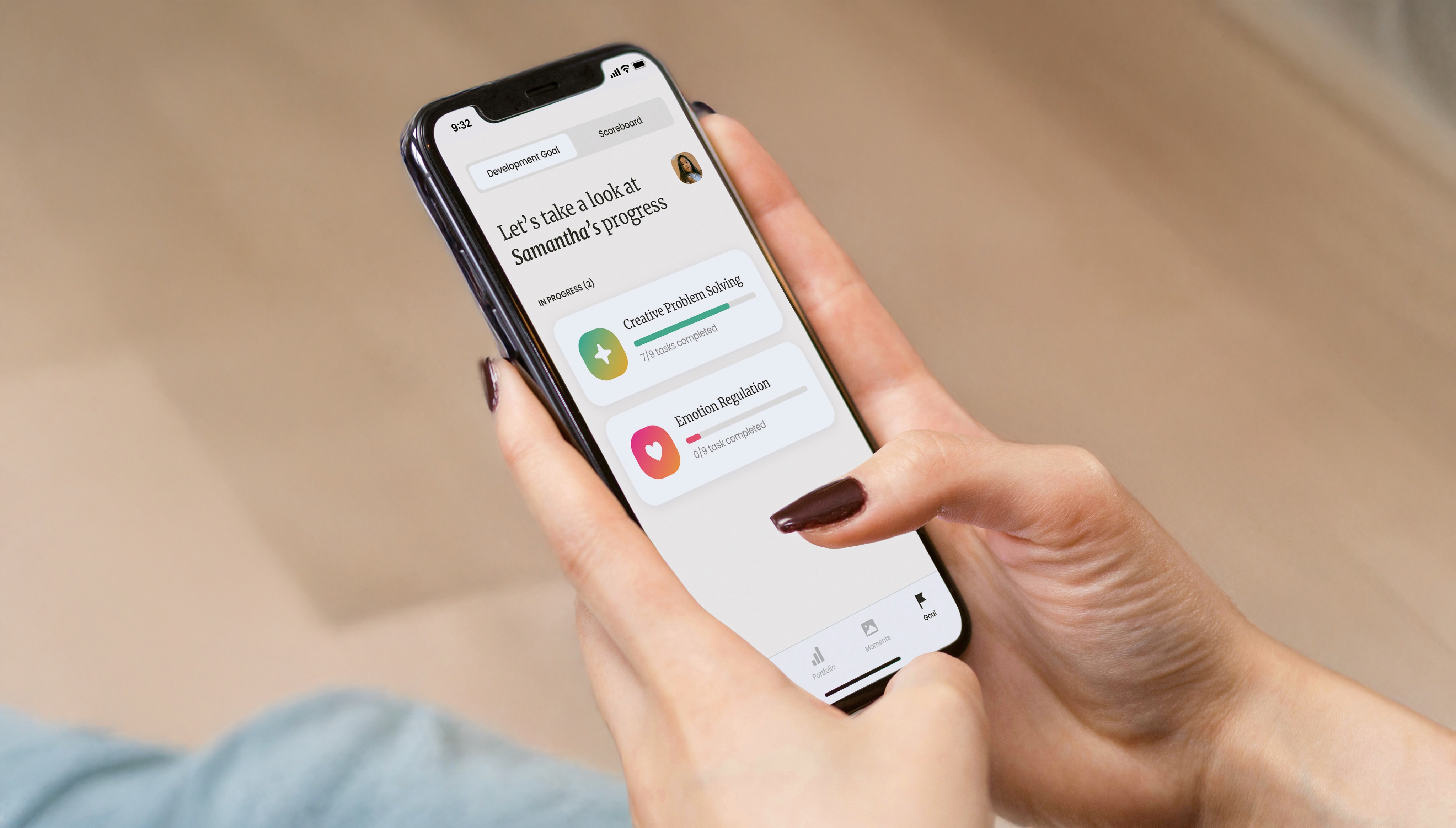
Background
Scope
To create a proof-of-concept (POC) based on secondary research. This POC will serve as a foundational design for further iterative development guided by user feedback. My role included UX research, UX strategy, wireframing and prototyping.
Client
Havence is a customizable preschool management app that support teachers and parents in managing tasks effectively.
Timeline
3 weeks
Context
Problem
There's a gap between the importance of parent-teacher collaboration and the tools available to support it, resulting in disengagement and missed opportunities for student growth.
This gap is especially evident in Singapore, where the MOE's NEL (Nurturing Early Learners) framework has emphasized holistic development since 2003. Yet, two decades on, many parents remain passive participants, highlighting a persistent disconnect between schools and families. To address this, collab must move beyond information updates to become engaging, intentional and shared.
CONSTRAINTS
Tight timeline meant the project had little room for extended research or iteration before launch
Lacked resources meant we had to be highly intentional with our decisions - from finding alternative ways to gather insights to prioritizing features
Solution
We prioritized launching a focused, functional MVP to validate the product's core value early by defining a minimal feature set rooted in addressing the core issue - collaboration inefficiencies.
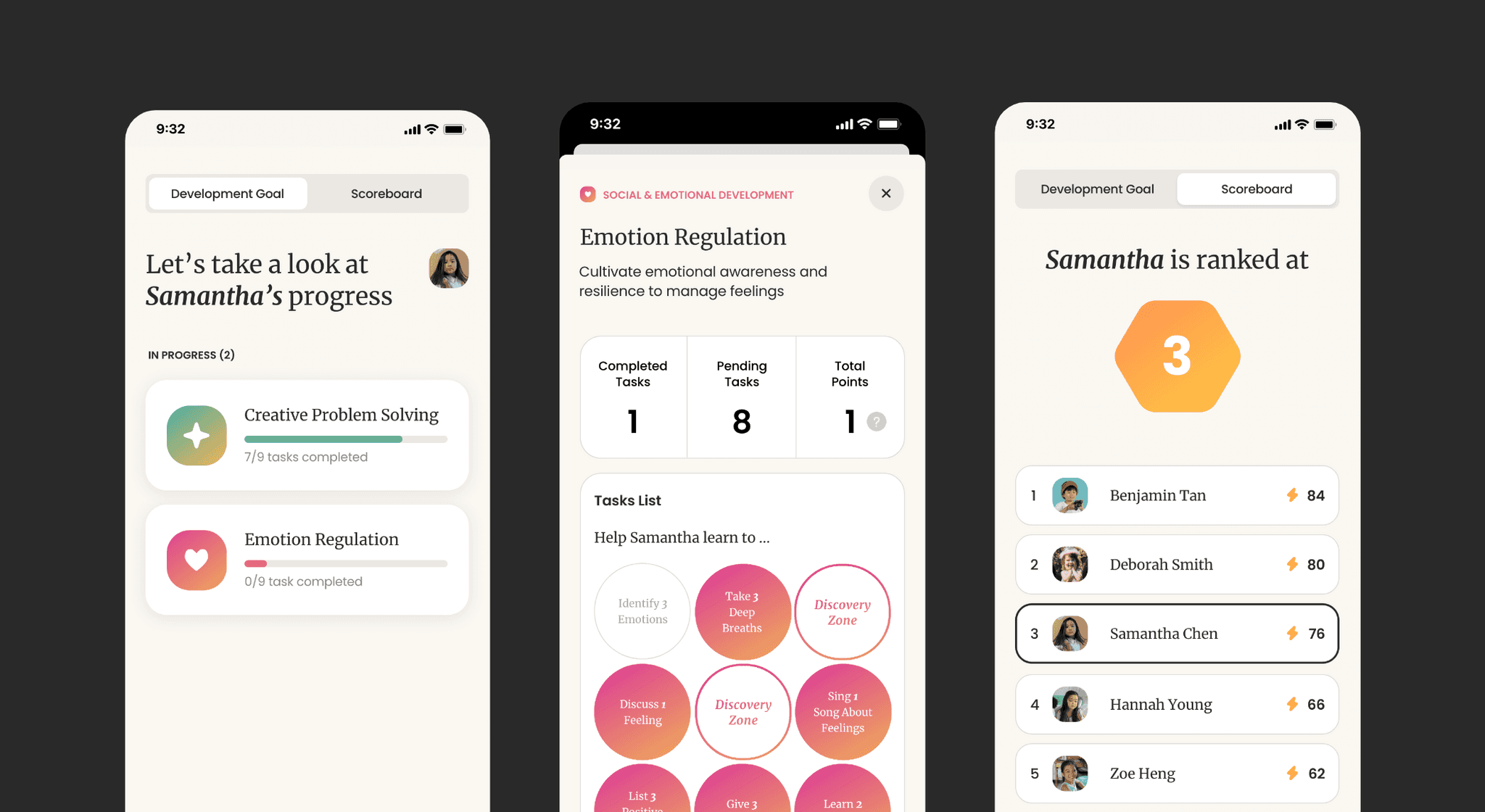
A gamified platform to drive parent-teacher collaboration through shared goals and mutual accountability.
Teachers
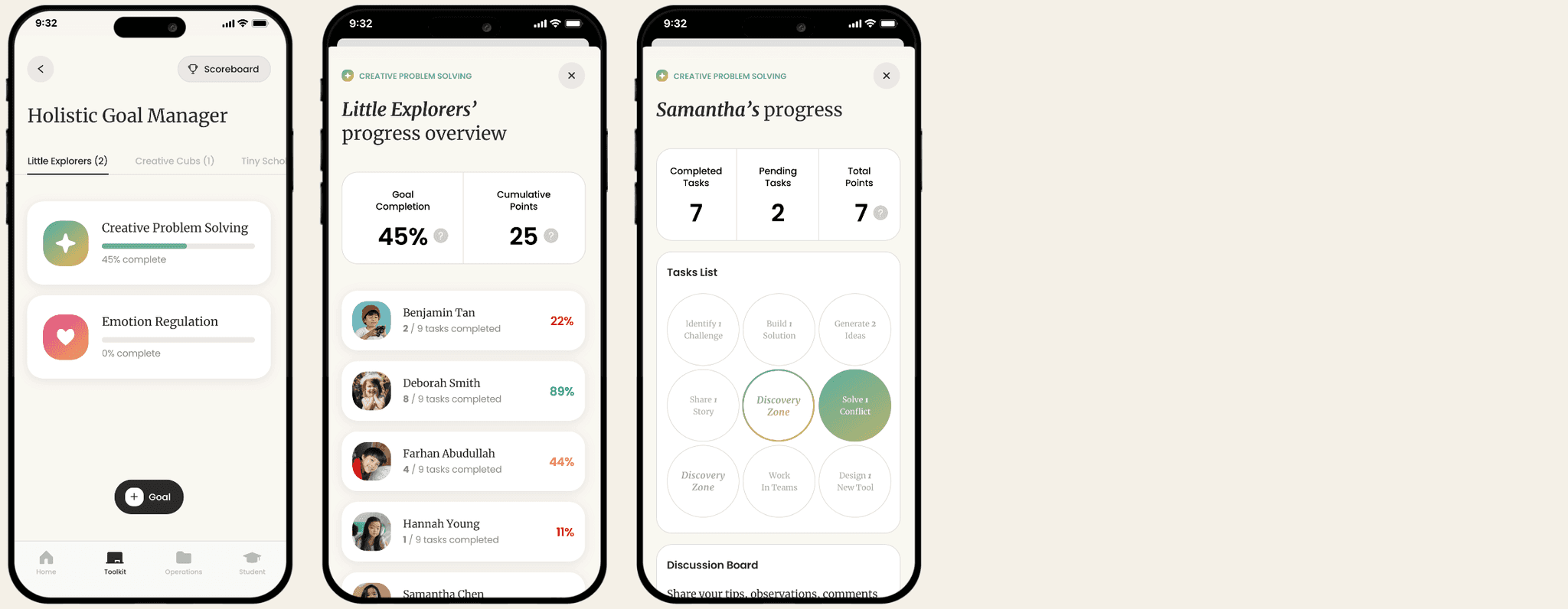
Set and track goals, engage parents and climb the scoreboard alongside student’s goal progress.
Parents
Track and complete goal tasks, co-set tasks and move their child’s rank up the scoreboard.
Supporting features
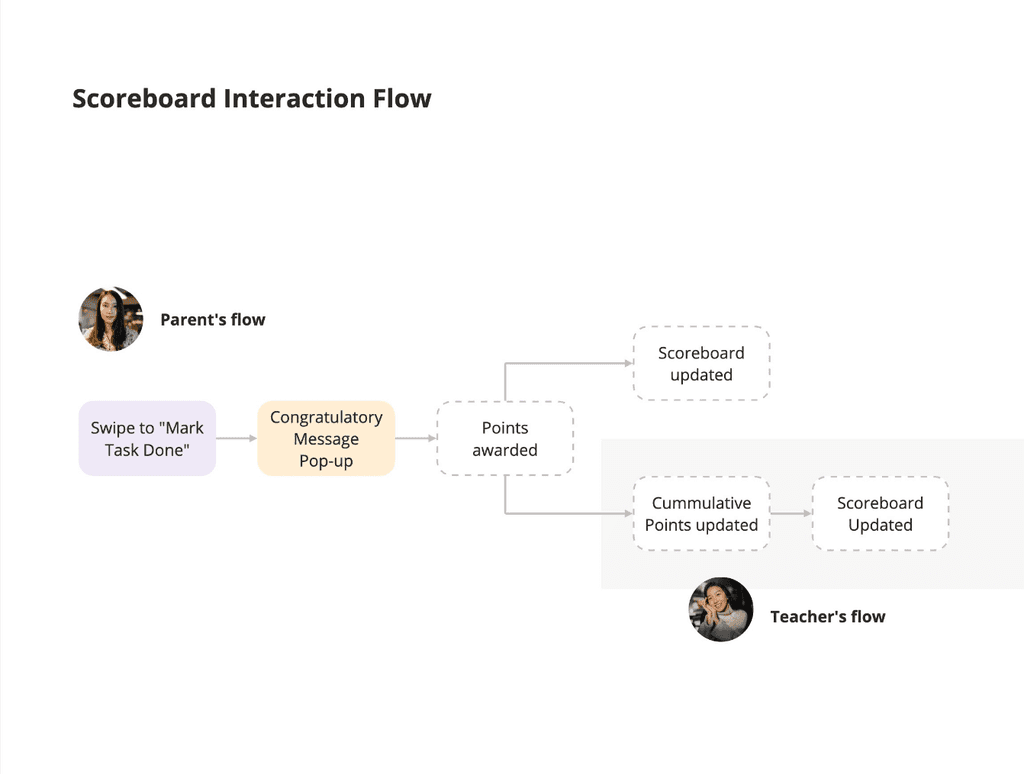
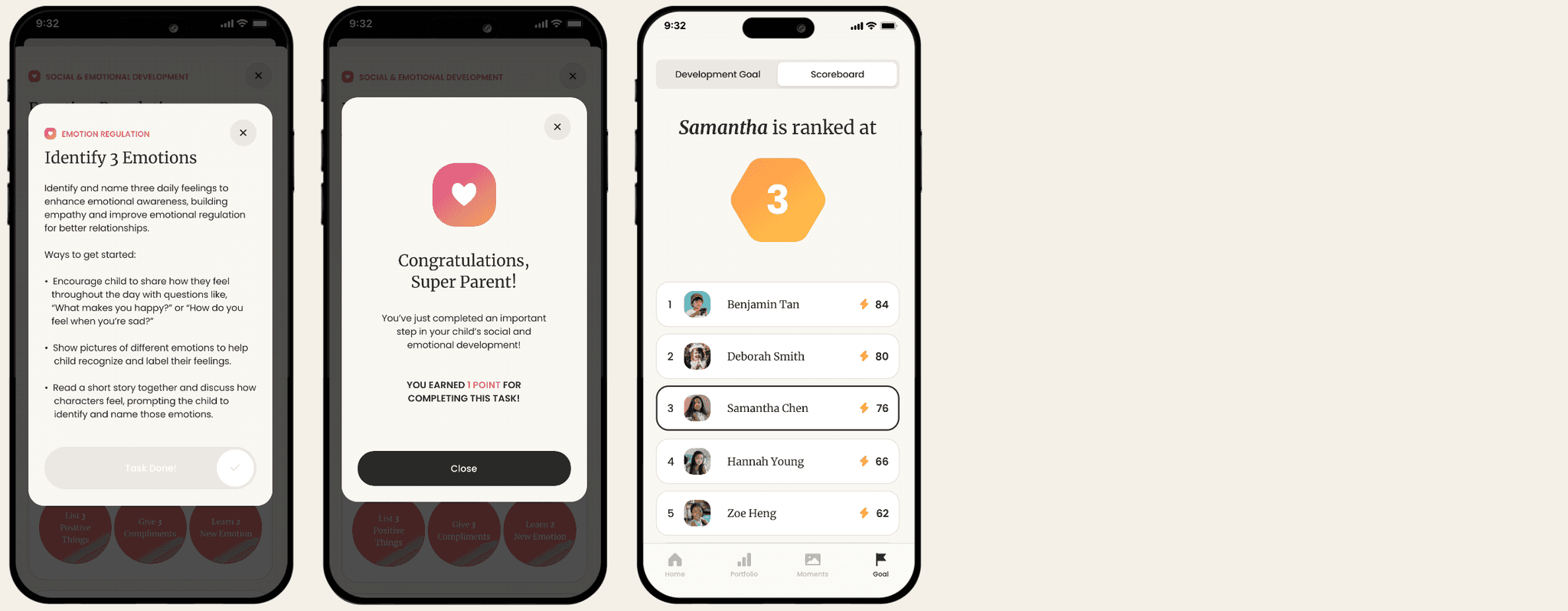
Mutual point and scoreboard to motivate progress
Point system ties teacher success directly to parent engagement, creating shared accountability
Visible ranking system provides effort recognition, making progress feels rewarding
Teacher
Parent
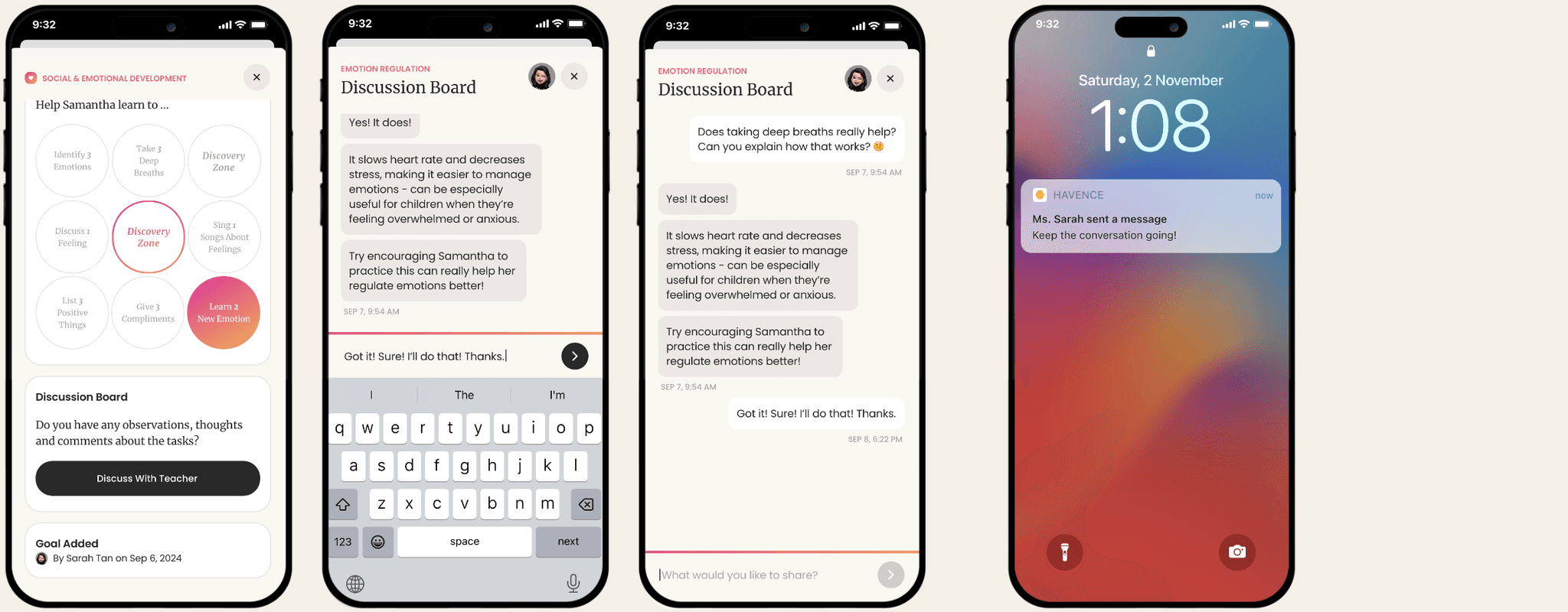
Discussion board to encourage communication and foster trust
Each goal has a dedicated discussion space for targeted guidance and interventions
Real-time notifications keeps everyone in the loop, ensuring no messages are missed
Teacher
Parent
Process
researching the problem space
Desk research revealed four barriers to parent engagement in child's holistic development
01
Academic achievement as the standard of success
Most parents equate success with academic milestones, making it difficult for them to buy into alternative approaches.
02
Dysfunctional teamwork & communication
Reactive and defensive behavior of parents and teachers cause friction and conflict, reducing motivation on both ends.
03
Limited exposure & understanding
Resources for parents are limited and not actively promoted, leaving parents uninformed and disinterested.
04
Lack of visible progress or outcome
There are currently no tangible metrics available to track progress and outcome, parents struggle to see its value.
Learning from successful models
Comparative study revealed opportunities to enhance engagement through parent-teacher collaboration
Research into Finland and New Zealand showed their success in holistic development is driven by strong parent-teacher collaboration. This discovery prompted me to compare their practices with our own to identify gaps.
✶ Teachers key practices
Finland
N. Zealand
Singapore
Co-develop learning goals with parents
✔️
✔️
❌
Identify engagement opportunities
✔️
✔️
😐
Facilitate development activities
✔️
✔️
✔️
Provide support to achieve goals
✔️
✔️
😐
Provide regular feedback
✔️
✔️
😐
Engage in regular communication with parents
✔️
✔️
😐
✱ Parents key practices
Finland
N. Zealand
Singapore
Co-develop learning goals with teachers
✔️
✔️
❌
Observe child progress
✔️
✔️
😐
Provide regular child progress update
✔️
✔️
❌
Practice development activities
✔️
✔️
❌
Engage in regular communication with teachers
✔️
✔️
😐
analyzing market and competitions
Competitive analysis highlighted the lack of a parent-teacher collaboration solution
Qoqolo

Taidii
Illumine
Current solutions primarily provide basic communication and information-sharing tools, however:
❌ Passive communication tools does not guarantee engagement
❌ One-sided reporting functionality lacks actionable feedback for parents
❌ Obligatory parent assignment feels like a chore and forceful by nature
This finding highlighted a gap in the market for a solution that actively promote parent-teacher collaboration, reinforcing our opportunity for development in this area.
defining proto-persona
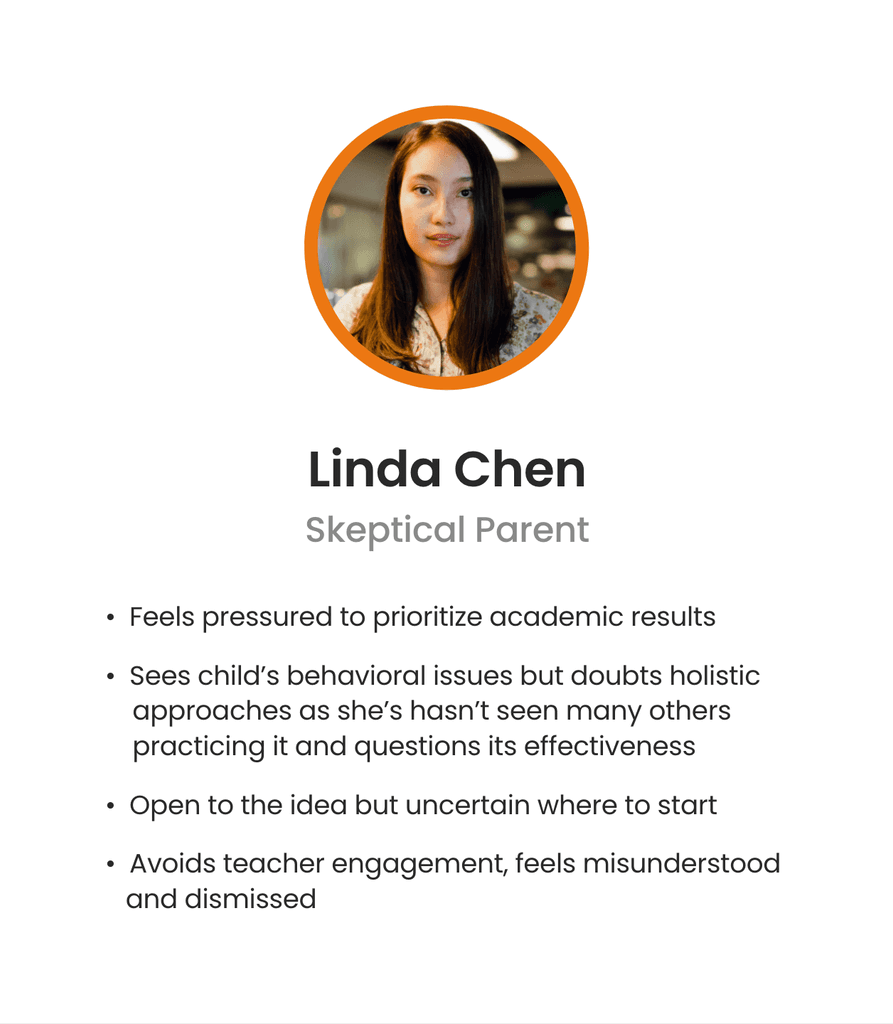
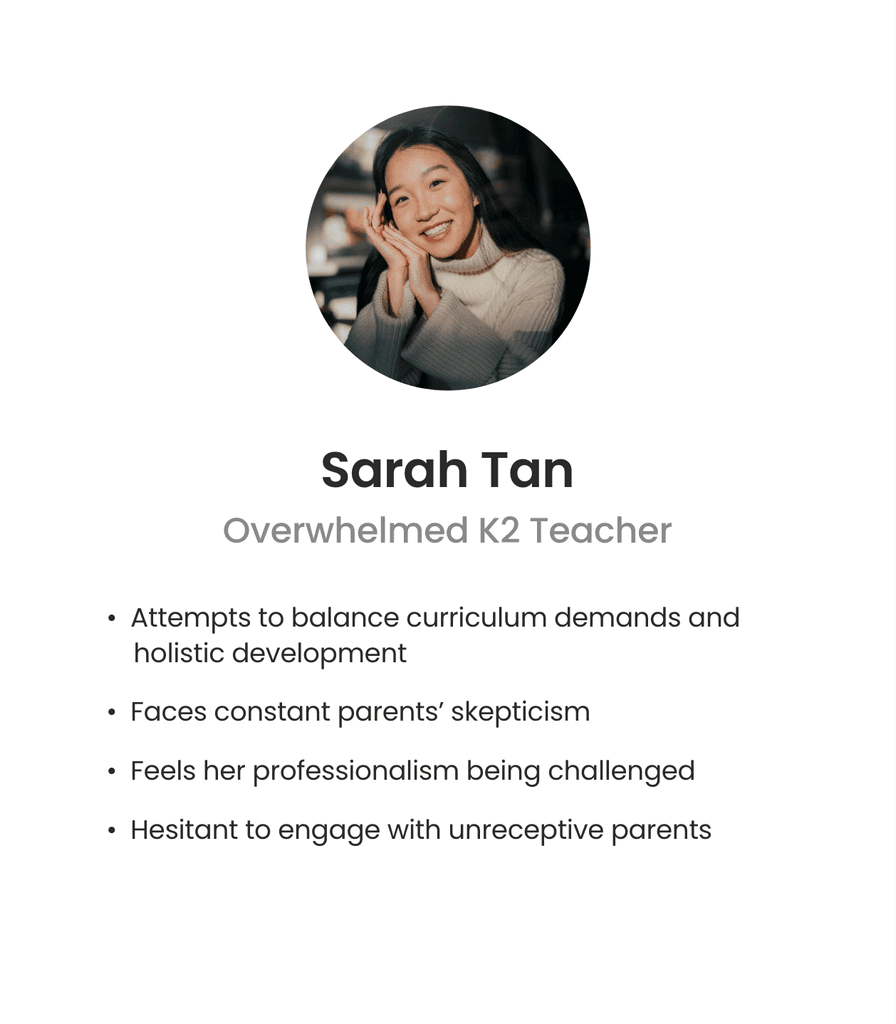
Consolidating key insights into proto-personas to address collaboration challenges and frustrations
Since the focus is on collaborative solution, it would most likely be a tool shared between parents and teachers. Therefore, I included teacher as a supporting end users who shared an overarching goal.
✶ Proto-personas were grounded in desk research, behavioral observations, and insights from existing educational tools (local forums, social medias, news articles). These were used as working hypotheses to guide early design decisions.
How Might we…
Motivate parents and teachers to build a trusting collaboration that enhances engagement in children's holistic development?
Features ideation
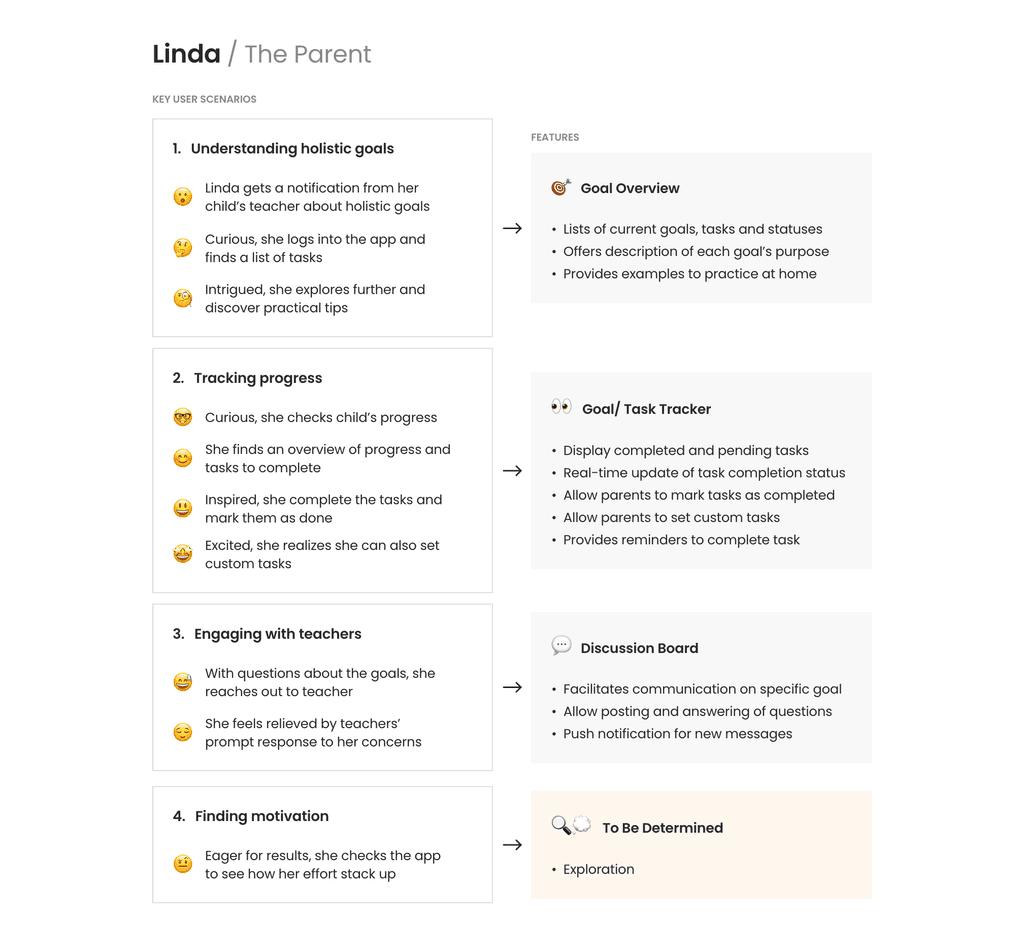
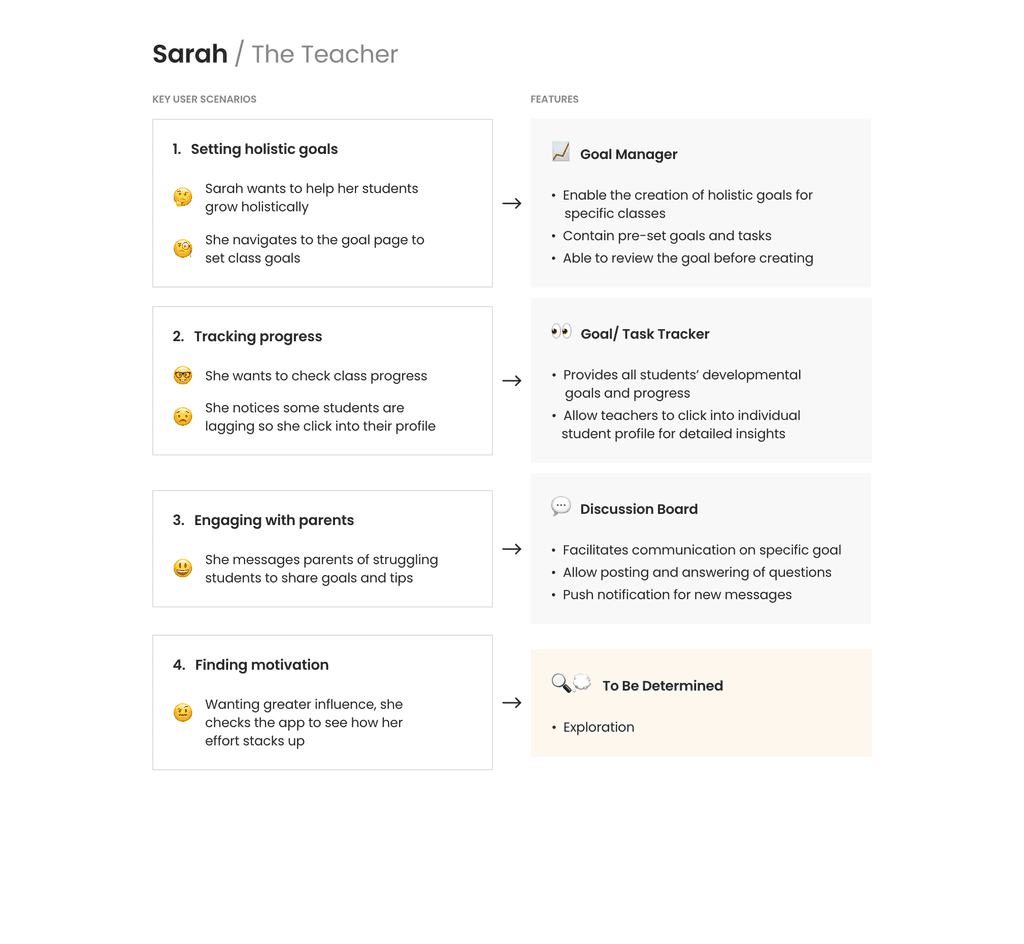
Outlining key user scenarios to ideate for targeted features
To ensure we met user needs while staying within project constraints, I started by mapping out key user scenarios for each proto-persona. These scenarios were based on our initial assumptions but provided a solid foundation for identifying targeted features.
Given our tight timeline + limited resources, I prioritized lean, functional feature set necessary for the MVP. This meant only including features that were critical to the core user journey that would directly support parent-teacher interaction and collaboration without introducing additional complexity.
Integrating gamified model
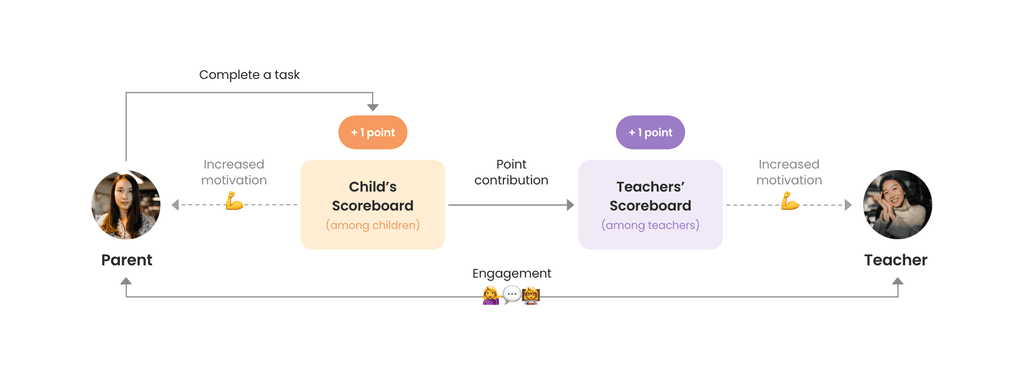
Sustained motivation inspired a gamified model focused on shared accountability
Building on the identified features, keeping parents and teachers motivated and engaged required more than just functional tools. Drawing inspiration from motivational theory, which emphasizes the power of points, progress, and rankings in driving intrinsic motivation, I designed a gamified model to turn collaboration into a rewarding and sustainable experience.
Rationale: The model aligned both parties' efforts by tying teacher success to parent participation through a point system and a shared scoreboard. This created a continuous feedback loop of motivation and accountability, helping reinforce ongoing engagement and keep both parties incentivized.
Mapping user flows
Consideration for our users’ needs and constraints guided a user flow focused on quick and sustained collaboration
A closer look at some of the high-level key user flows:
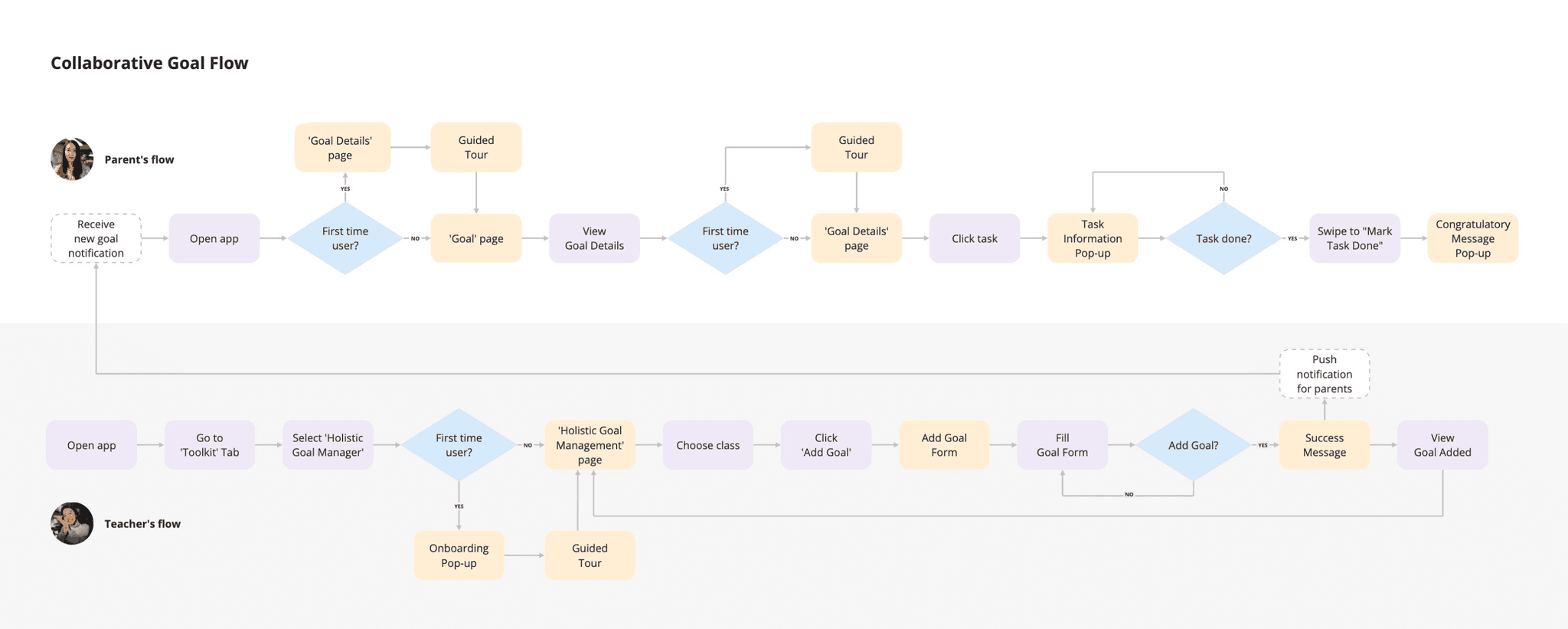
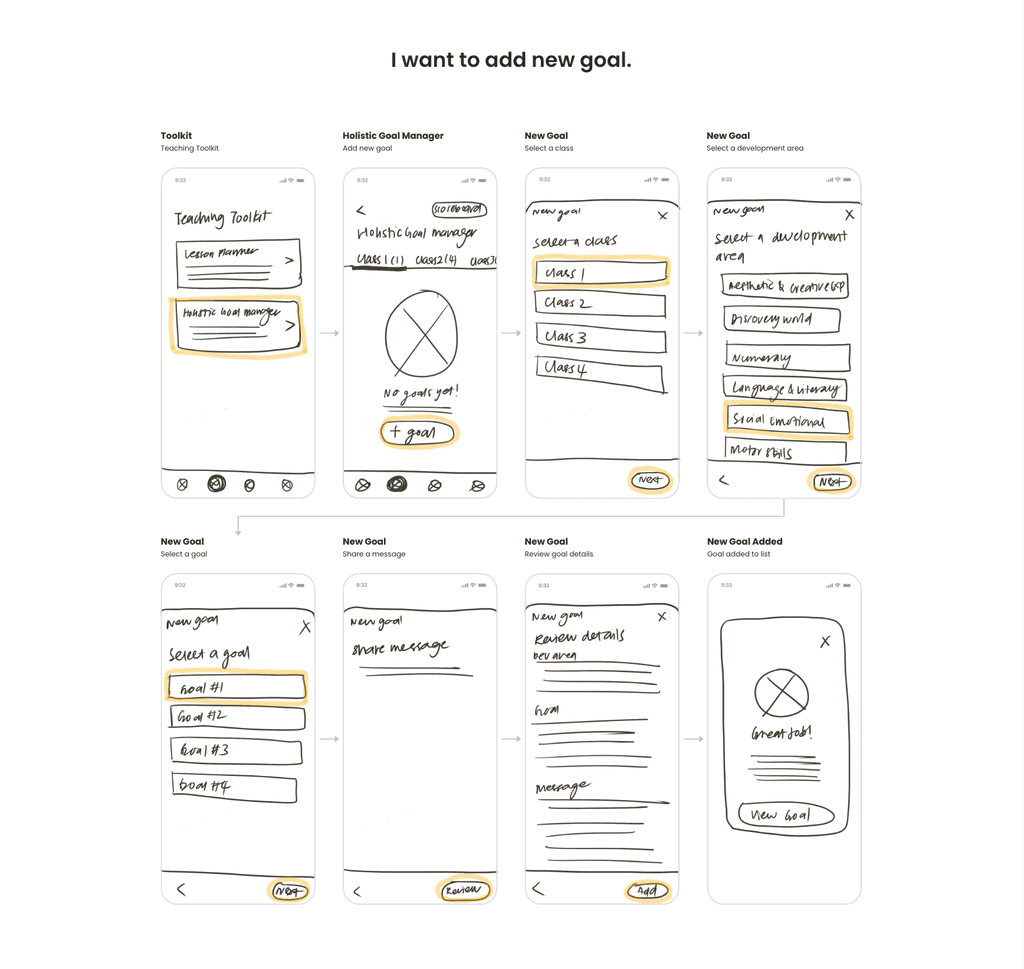
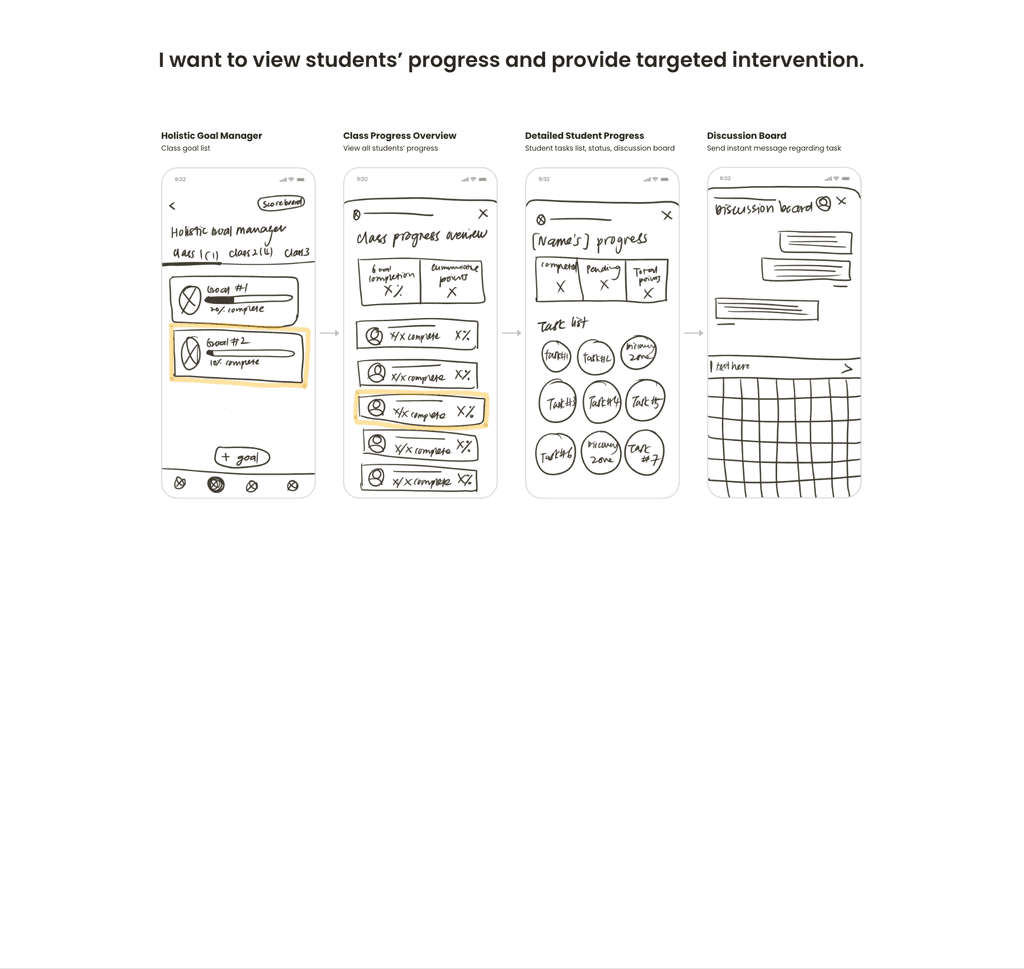
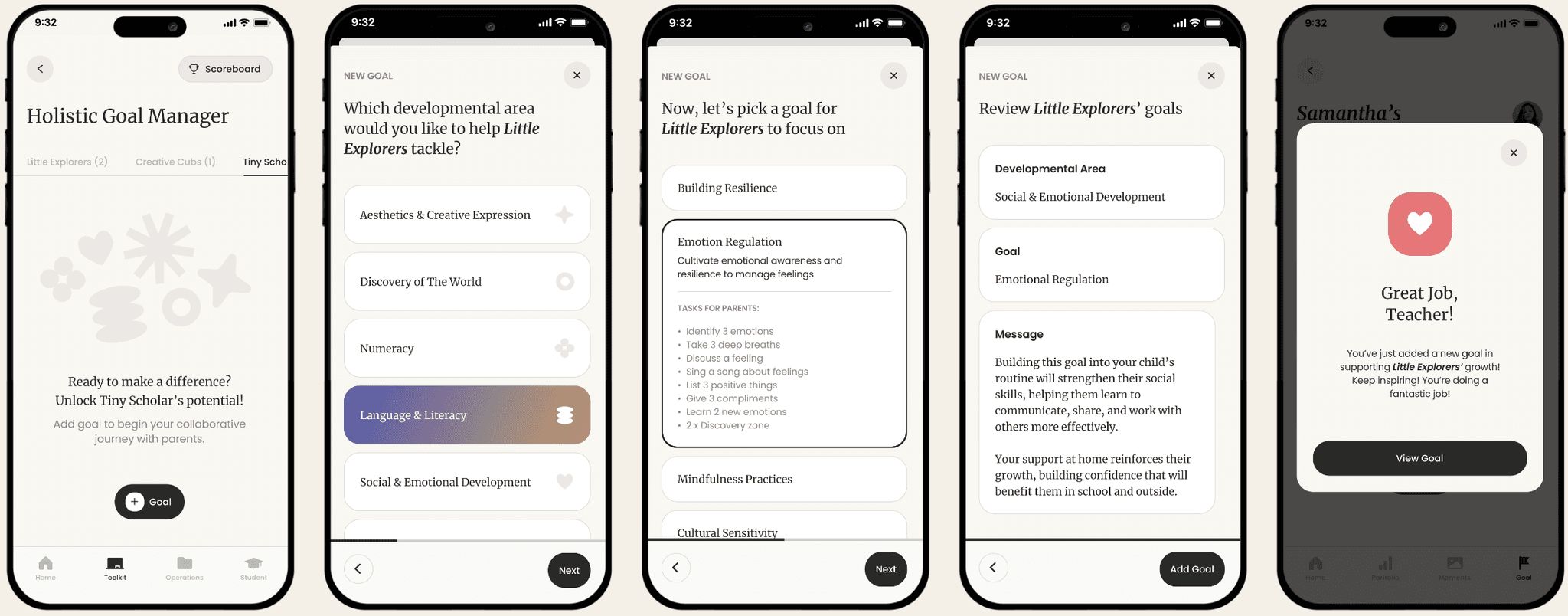
Through research findings, we learned that teachers often have limited time during class and they couldn’t afford multi-step inputs or high interaction cost. This pushed us to simplify our forms, reduce the number of clicks to update a goal, and avoid asking for unnecessary information.
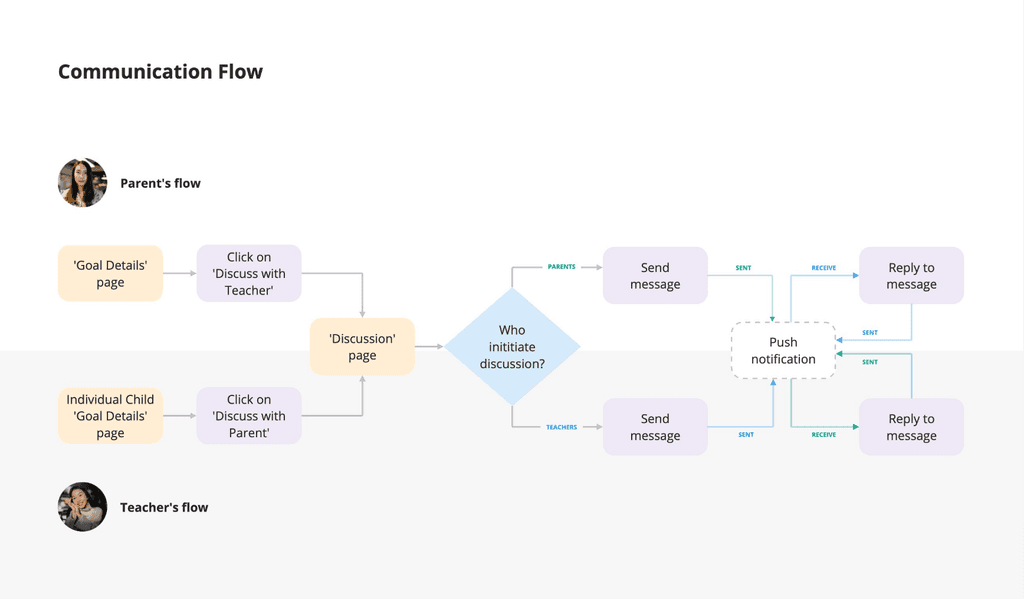
Since many users of havence already used tools like WhatsApp, I designed the in-app interaction tool to complement (not replace) those workflows. Instead of real-time chat (which can be noisy and hard to track), I introduced a threaded discussion board focused on structured, asynchronous updates.
This format allowed teachers/ parents to post goal related updates/ questions/ progress at their own pace while keeping communication organized by goal. It also provided a clear record of collaboration tied directly to specific goals, something traditional chat tools doesn't support.
Designing low-fidelity wireframes
Defining interface layout with low-fidelity designs
With tight timeline and limited resources, I started with rough wireframes of key screens. Through multiple iterations and client feedbacks, the design evolved from a standard list-based structure to an intuitive card-based layout that improves content hierarchy and information scanning.
Parent
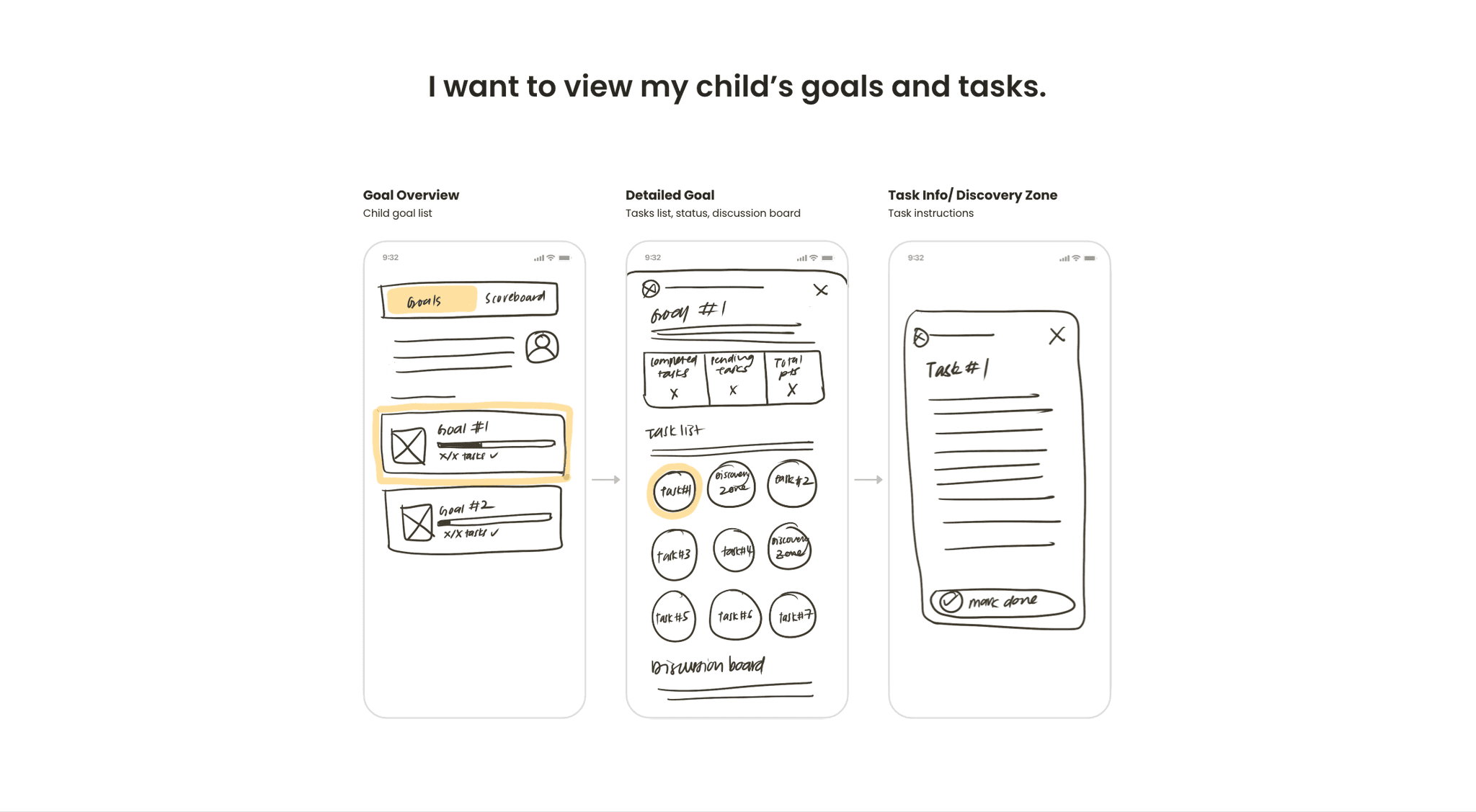
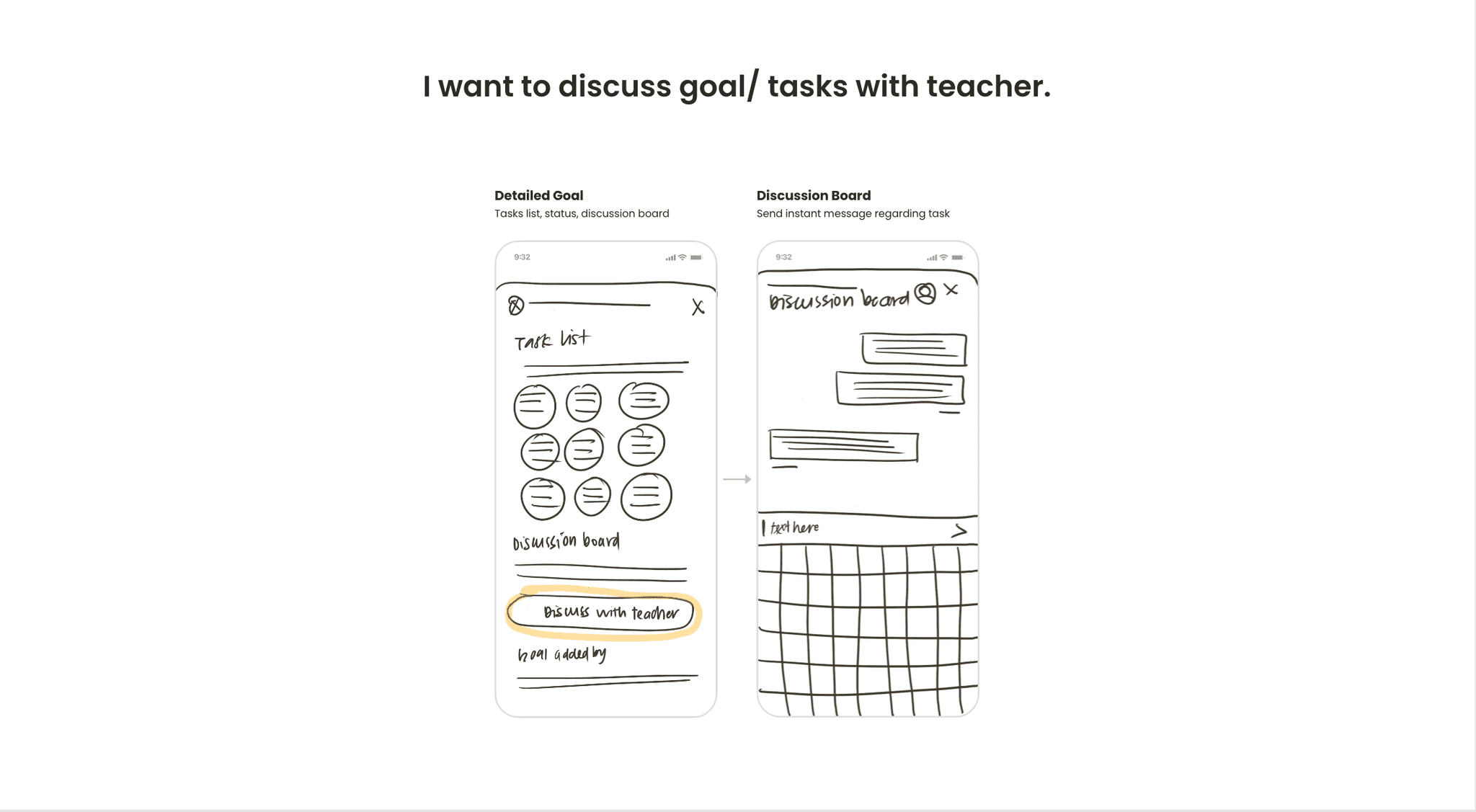
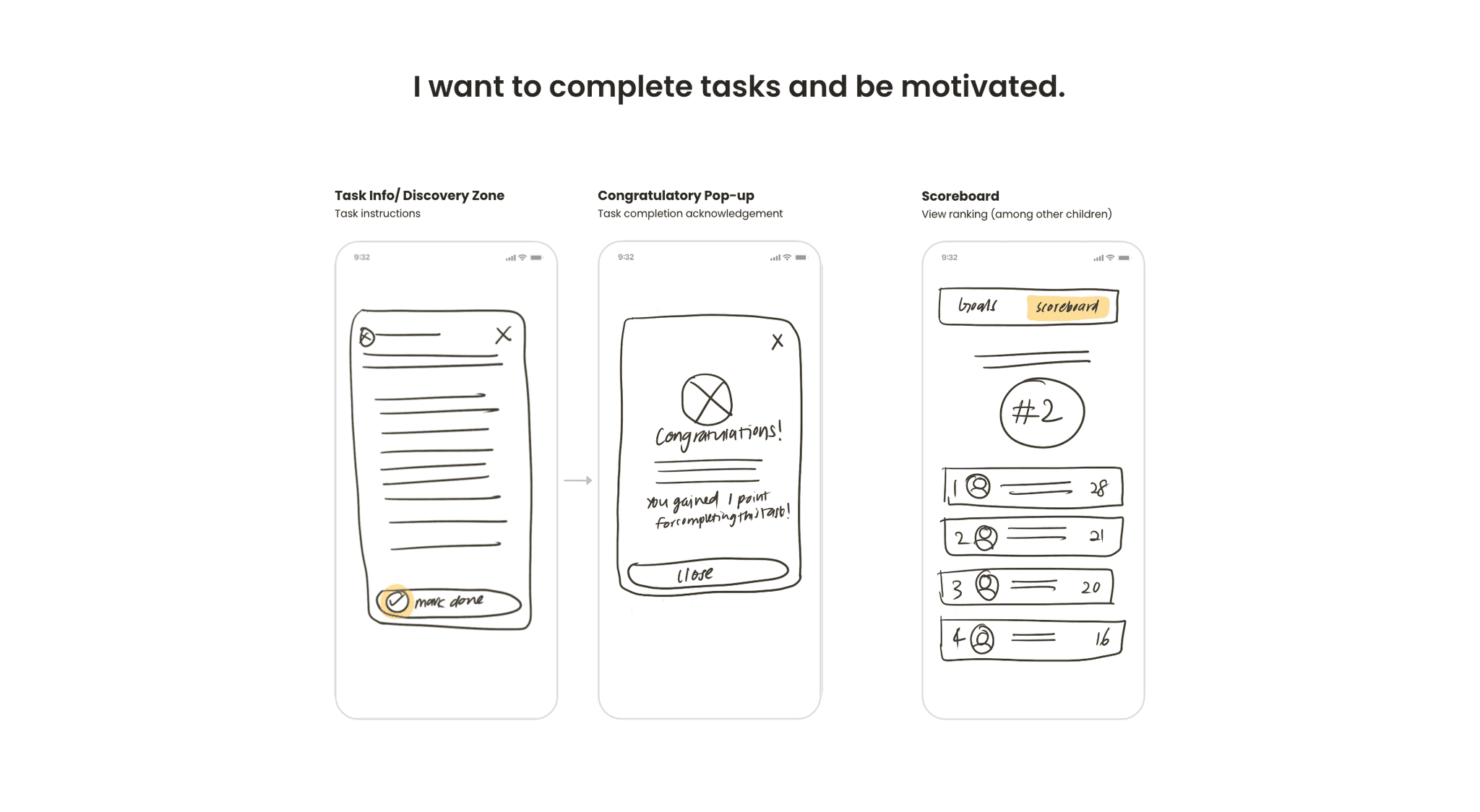
Teacher
Final outcome
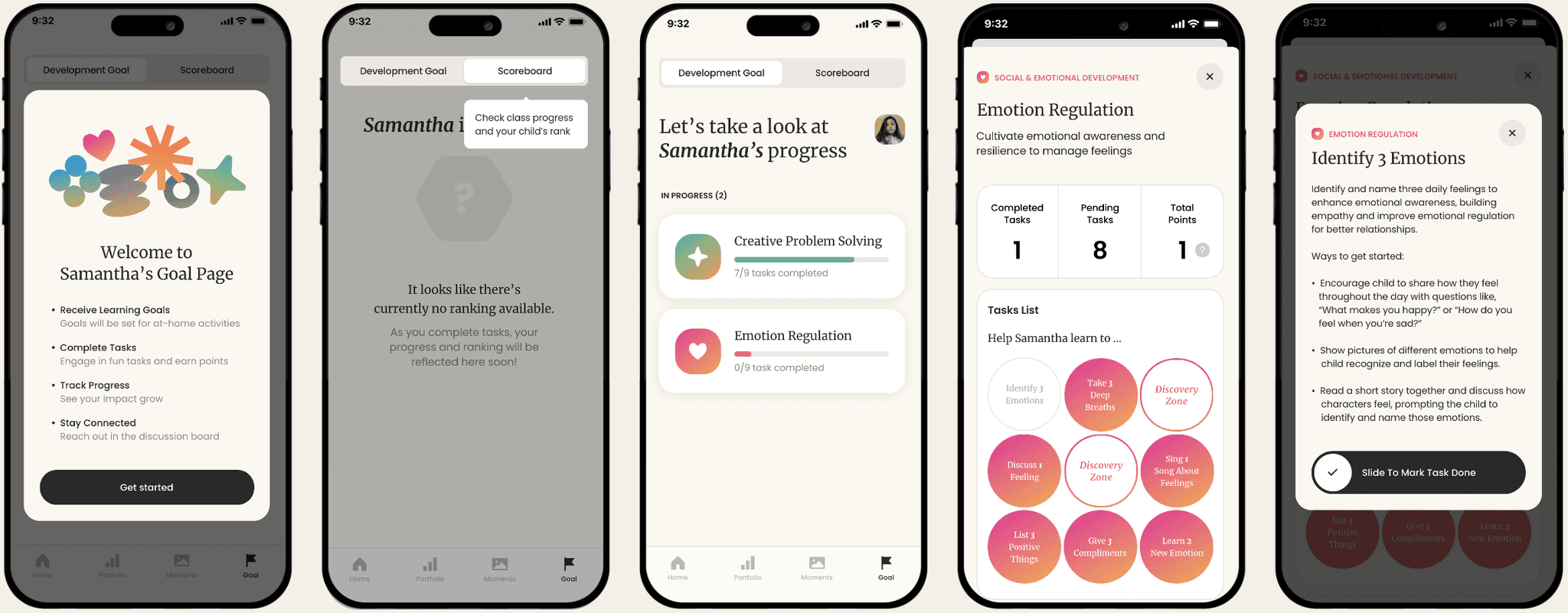
Onboarding + View & Track Goals (parent)
Initiate Discussions + Receive Reply Notification (parent)
Complete Task + View Ranking (parent)
Set New Goal (teacher)
View Class & Student Progress (teacher)
Next steps
Development and validation phase
The next step involves handing the design over to the development team for implementation. Once deployed, the feature will be available to existing clients. Feedback and data will be collected to validate core functionalities for further iterations.
The monitoring phase will span 2 months, during which we will track key success metrics:
Engagement
Target of average 20% weekly active users - both parent and teachers - across schools
Task Completion
Target of average 15% assigned tasks completed by parents across schools
Comm. Frequency
Target of average 3+ interactions/ week between parties across schools
Once sufficient data is collected, we will begin the first round of iteration, focusing on refining features and addressing usability or engagement issues identified during the monitoring phase.
Key takeways
When user research is scarce, it is crucial to stay agile
Balancing assumptions with actual user needs was a challenge. While desk research guided the design direction, it was difficult to fully understand what users truly needed without direct feedback. However, this uncertainty has also pushed me to stay agile and constantly evaluate my decision to ensure the design remained adaptable, so that it can be evolved to better meet user needs when real-world data became available.
Challenging conventional solutions open new possibilities
It’s tempting to rely on conventional solutions, especially when dealing with established issues. For instance, improving communication channels might seem like an obvious way to enhance collaboration, yet this approach risks a solution that may not fully address the underlying issues. This realization pushed me to explore other strategies and rethink how we can create impactful solution that can open up possibilities and change the way users traditionally engage with holistic development, in which gamification is being adopted.
Crafted with love and many cups of matcha latte 🍵
© 2024 Portfolio by Grace Pang